Immunosurveillance (면역 감시)
- 외부 병원체, 동종/이종 이식된 조직을 공격하는 면역계. 같은 mechanism이 tumor cells의 self-antigens도 공격함.
- effective immunosurveillance → tumor development를 억제
- 장기이식으로 면역이 억제된 사람에서 종양 감수성이 dramatic하게 증가
- tumor가 면역반응을 끌어냄 (lymphocyte와 macrophage가 tumor로 많이 들어감) ⇒ 어쨌든, 면역 반응은 tumor 상대하는 데 큰 역할
Tumor Antigens
- tumor cell의 surface에 발현되는 proteins, glycoproteins, glycolipids, carbohydrates
- tumor-specific antigens와 tumor-associated antigens를 포함한다.
- tumor-specific : tumor에만 발현
- tumor-associated : tumor에도, 정상세포에도 발현
- tumor antigen은 진단과 치료에 유용, 전이되지 않고도 혈관을 돌아다니며 tumor를 detect & treatment의 반응 모니터링이 가능하다.
- 어떤 tumor antigen은 effective immunosurveilance의 target이 되기도 함
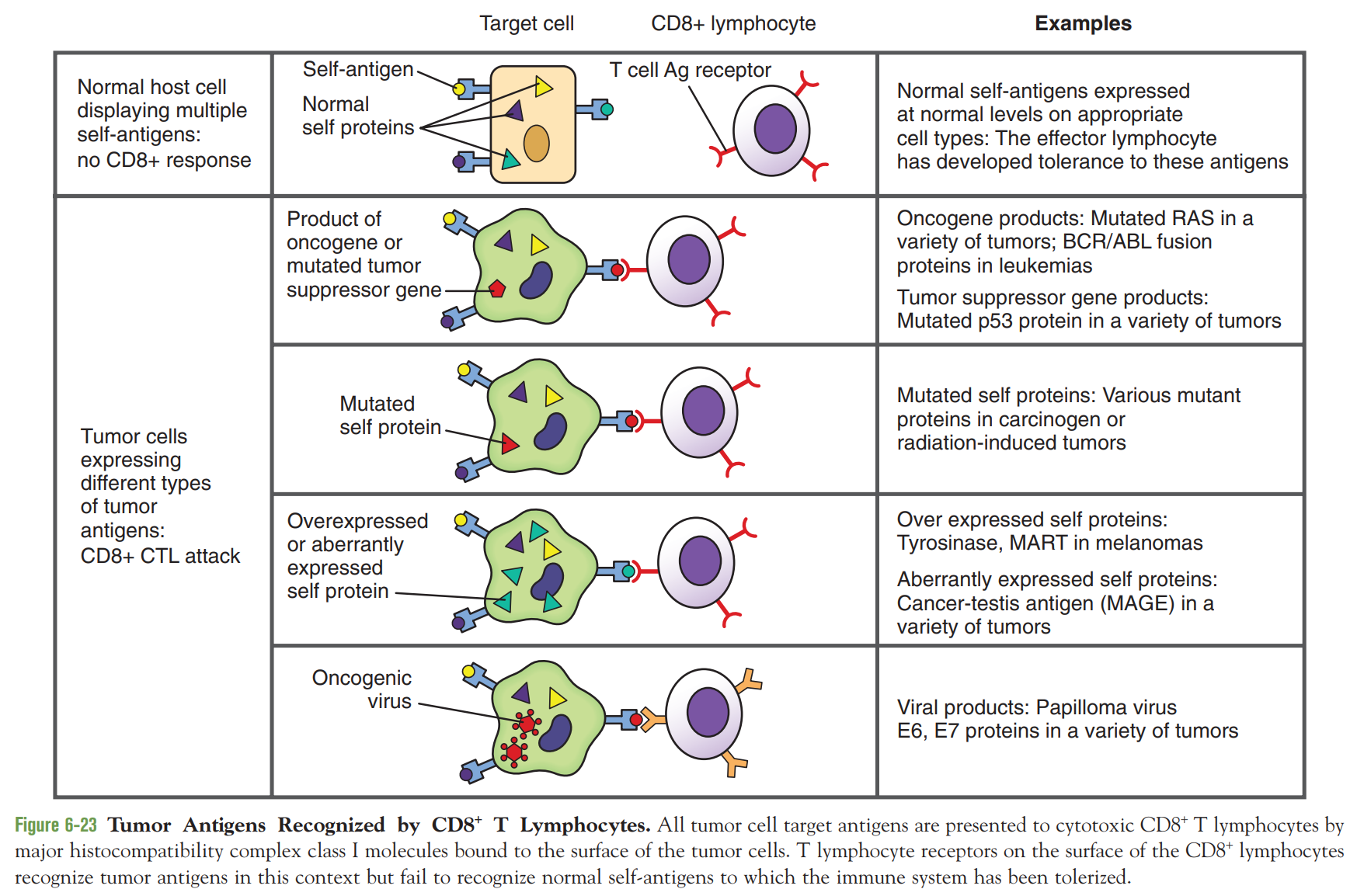
- tumor cell 표면의 MHC class Ⅰ molecule에 의해, tumor cell target antigen이 cytotoxic CD8+ T lymphocyte에 제시
Antitumor effector mechanisms
- tumor antigen에 대한 많은 immune response가 있다. (사진)
- innate immune system : 가장 덜 specific, 즉각적, 일차 방어선.
- NK cell, macrophage가 있음.
- Dendritic cells에 의한 antigen-specific priming은 필요하지 X
- adaptive immune system : 더 specific
- cell-mediated immune response^[antitumor defenses에서 가장 효과적]과 humoral immune response이 있음
- tumor antigen이 immune effector cells에 제시되어야 함
- Dendritic cells가 tumor cell에서 분비된 antigen을 capture, 작게 잘라서 MHC로 전달
- Antigen-activated CD8+, CD4+ T lymphocytes는 tumor-specific cytototoxic & helper T lympocytes로 발전^[B lymphocytes는 immunoglobulin-secreting plasma cell로 발전]
- CD8+ : MHC class Ⅰ로 인식 / CD4+ : MHC class Ⅱ로 인식